 Delivered Nationwide
Under the Equality Act 2010, schools must ensure that students, staff, and visitors can move freely and participate equally in school life. Creating inclusive environments supports well-being and learning outcomes. This guide explores the key considerations, from regulations and reasonable adjustments to physical design and movement solutions such as lifts, to help schools plan with confidence.
Why Accessibility in Schools Matters
For disabled pupils, accessibility is about levelling the playing field; removing barriers so they can participate fully alongside their peers. The Equality Act 2010 places a clear duty on schools to make reasonable adjustments and to plan proactively for access across the physical environment, curriculum, and communication.
These responsibilities extend beyond pupils. Parents, staff, and visitors must also be able to move safely and independently around the site. By investing in accessibility, schools can comply with the law and foster a culture of inclusion and respect, benefiting the whole community.
In practice, this means thinking not only about legal compliance, but also about the everyday experience of moving around a school site.
Understanding Legal Duties and Regulations
Schools are legally bound by the Equality Act 2010, which prohibits discrimination against disabled pupils in admissions, teaching, and day-to-day activities. The Act requires schools to make reasonable adjustments so that disabled pupils are not placed at a substantial disadvantage. These may include changes to teaching methods, the use of assistive technology, or adapted policies.
Physical accessibility, however, is addressed through a different duty. Schools must prepare and maintain an accessibility plan that sets out how they will improve the physical environment, curriculum access, and the provision of accessible information. Local authorities must also maintain accessibility strategies for the schools they oversee.
These obligations sit alongside Part M of the Building Regulations, Health and Safety law, and best-practice guidance such as BS 8300, which all provide detailed standards on building access. Regular review of accessibility plans is essential to ensure that schools continue to meet legal duties and respond to changing needs.
For schools, the benefit is clear: a well-prepared accessibility plan gives confidence that pupils, parents, and staff will not face unnecessary barriers.
Reasonable Adjustments in Practice
A reasonable adjustment is a change that enables a disabled pupil to access education on the same basis as their peers. In schools, this often means adapting day-to-day practices rather than making large physical alterations.
Examples include:
- Providing classroom materials in alternative formats
- Adjusting seating for pupils with visual impairments
- Adapting school uniforms for those with medical conditions
- Using communication tools such as traffic light cards
- Timetable flexibility to help students build up attendance gradually
Effective adjustments rely on collaboration. Schools are expected to work with parents, pupils, and external professionals to agree on the right support, and to review it regularly as needs change.
This small change in approach, treating accessibility as part of everyday school life, can make a big difference to inclusion. It is important to note that these adjustments differ from physical changes to the school site, which are managed through long-term accessibility planning and building regulations.
Designing the Physical Environment
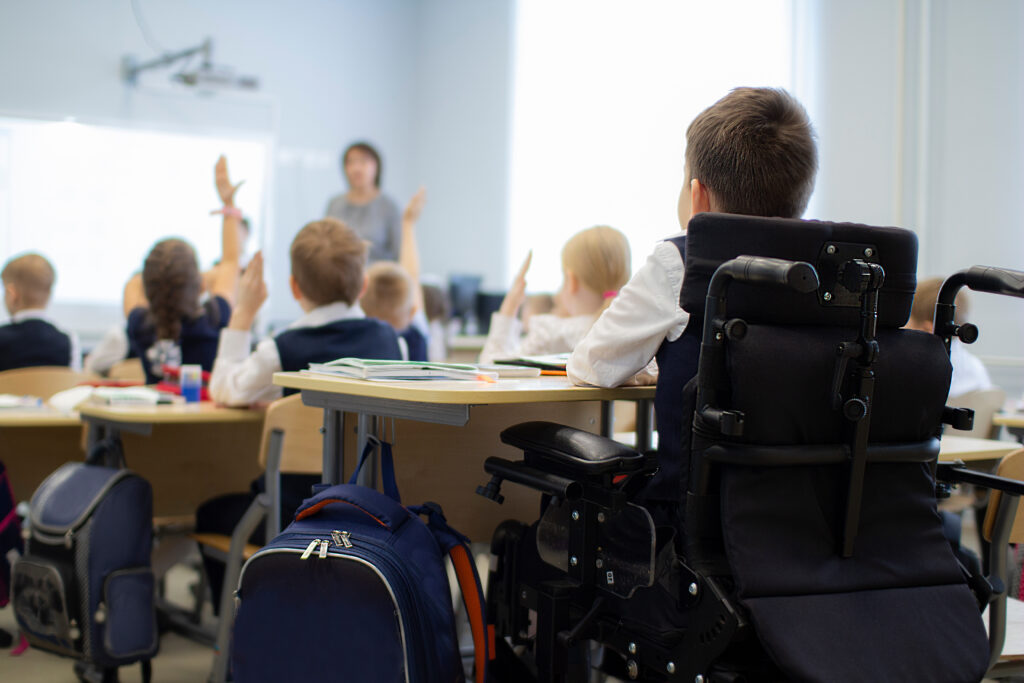
Careful planning of routes, layouts, and support systems can make a significant difference without requiring major structural changes. The focus should be on making daily movement comfortable, safe, and independent.
Routes & Entrances
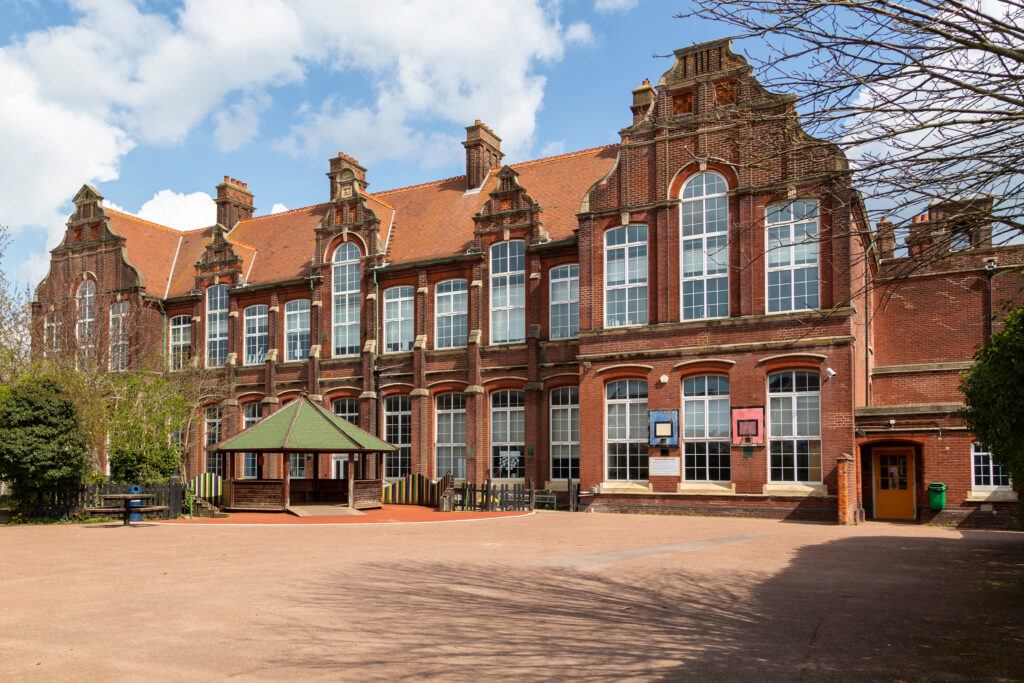
Approaches to school buildings should be step-free, with shallow ramps or level access from parking and drop-off points. Wide, uncluttered pathways mean wheelchair users can travel safely between classrooms without delay or frustration. Designated accessible parking bays should be positioned close to entrances and sized for safe wheelchair transfer.
Internal Layouts
Inside the building, corridors should be wide enough (at least 1,200mm) so two wheelchair users can pass each other safely. Doorways must provide a clear opening (minimum 800mm). Slip-resistant flooring, shallow ramps between levels, and accessible classrooms and laboratories all contribute to independent movement and greater confidence for pupils navigating the school.


Visual, Audible & Tactile Aids
Clear, well-placed signs help individuals find their way easily, reducing stress during busy school days. Colour contrast can highlight routes and stair edges, while alarms should combine audible and visual signals. Induction loop systems support pupils and staff with hearing impairments, ensuring no one misses important information.
Emergency Planning
Refuge points, evacuation chairs or lifts, and trained staff ensure that disabled users are not placed at risk. Clear signage and regular practice are essential parts of a robust emergency plan. In practice, this preparation gives everyone in the school community reassurance that they can exit safely if required.
The Role of Lifts in Accessible Schools
In multi-level schools, lifts are often essential to provide step-free access for pupils, staff, and visitors. They ensure that all areas are available to everyone, regardless of mobility needs. Choosing the right type of lift depends on the building layout, available space, and expected level of use.
Lift Types in Education
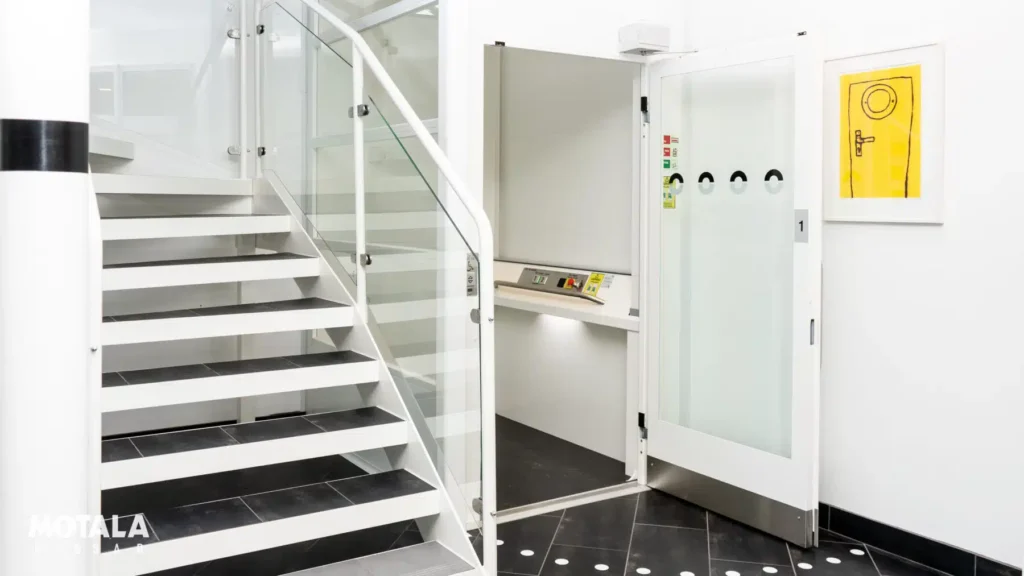
- Vertical Platform Lifts: Compact and retrofit-friendly, these lifts are a lifeline in older schools, making upper floors accessible without major building work.
- Cabin Platform Lifts: Enclosed units with automatic doors and single-touch controls, offering the feel of a passenger lift at a lower cost and with simpler installation.
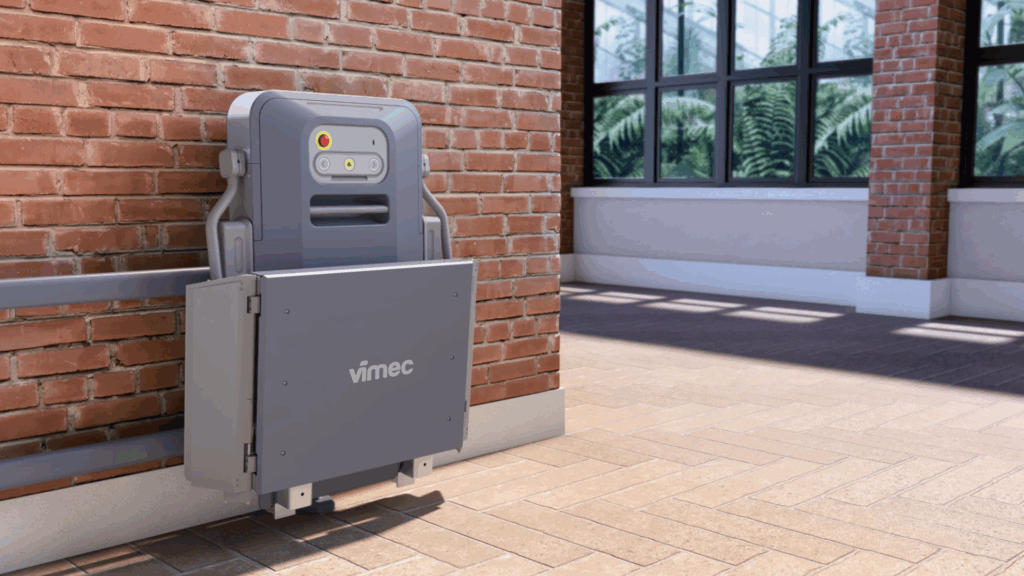
- Inclined Stairlifts: Designed to run along staircases, they are valuable in heritage schools or narrow buildings where space for a shaft is not available.
- External Lifts: Weather-protected lifts can connect playgrounds, sports facilities, or split-level buildings across a campus.
Key Considerations
When specifying a lift, factors such as platform size versus shaft size, headroom requirements, and pit or ramp depth must be considered. Features like key locking and intercoms reassure staff that lifts are safe for pupils to use and secure in day-to-day operation.
Why the Motala 2000 Platform Lift is Ideal for Schools
When space is tight, schools need a lift that adapts to the building rather than the other way around. The Motala 2000 range, available as both a platform lift and a cabin platform lift, has been designed with this spatial flexibility.
The Motala 2000 comes in three standard platform widths (1020mm, 1120mm, and 1220mm), requiring installation spaces of 1180mm, 1280mm and 1380mm, respectively. The Part M–compliant size is the 1120mm option, making it straightforward to meet building regulation standards.
Where depth is a concern, the platform can be configured from a compact 870mm usable depth (installation depth just 980mm) up to an XL size of 1680mm (installation depth 1790mm). This adaptability means the Motala 2000 can replace older, no-longer-compliant platform lifts or be built precisely to a school’s space restrictions.
FIND OUT MORE ABOUT THE MOTALA 2000 PLATFORM LIFT
Overcoming Challenges in Old and New School Buildings
In many older schools, narrow staircases and listed building restrictions make accessibility a real challenge. Here, compact platform lifts or inclined stairlifts provide practical, sensitive solutions without altering the character of the building.
By contrast, new-build schools are expected to integrate accessibility into their design from the outset. Here, lifts and circulation routes should blend into modern architecture, providing step-free movement without compromising aesthetics.
On university and college campuses, the scale of facilities demands solutions that are robust and capable of handling heavy daily traffic. Reliability and ease of use become key priorities in large, multi-storey teaching and accommodation blocks.
Some Real Life Examples
Case studies highlight how these challenges can be met in practice.
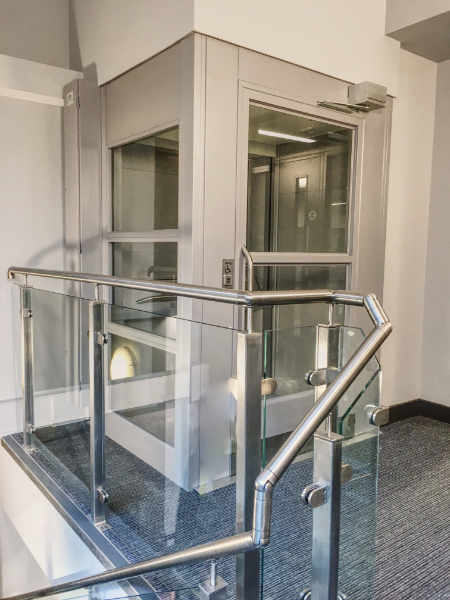
- At Loughborough University, a glazed platform lift was installed within a science building extension without obstructing natural light.
- At More House School, a compact lift provided safe, independent access in a new library and media centre with minimal disruption during installation.
Implementing Accessibility Improvements
Delivering accessibility in schools requires careful planning and collaboration. A thorough site survey is the first step, giving schools clarity on what’s possible and confidence that the chosen solution will meet daily needs.
Works should be scheduled to minimise disruption, with many schools opting for installation outside term time. Once in place, staff must be trained in the safe use of lifts, alarms, and evacuation equipment so procedures are followed confidently in daily use and emergencies.
With regular servicing and reviews, schools can be confident that accessibility measures will remain safe and reliable for future years.
Next Steps for Schools
Accessibility is both a legal duty and a moral responsibility for every school. Reviewing your accessibility plan and seeking expert advice ensures that pupils, staff, and visitors can move freely and safely across your site.
Taking these steps today helps create an inclusive learning environment that benefits the whole school community.