
 Delivered Nationwide
Creating accessible public buildings is both a legal duty and a moral responsibility, yet many people are unsure whether the law explicitly requires a lift. In reality, UK legislation focuses on ‘reasonable adjustments’ and compliant vertical access rather than mandating one specific solution. Below, we explain when a lift may be required, how the regulations work in practice, and which lift solutions are commonly used to provide compliant access.
The Equality Act 2010
The Equality Act 2010 replaced the Disability Discrimination Act and brought accessibility under a single legal framework. At its core is the requirement for service providers to make reasonable adjustments so that disabled people are not placed at a disadvantage when accessing a building or its services. While the Act focuses on preventing disadvantage for disabled people, the resulting access solutions often benefit a much wider group of users, including older visitors, parents with buggies, and anyone who struggles with steps. When a physical feature blocks independent access (such as a staircase), building owners may need to introduce an alternative route.
In many multi-storey public buildings, a lift becomes the most practical and effective adjustment, even though the Act does not specify one by name.
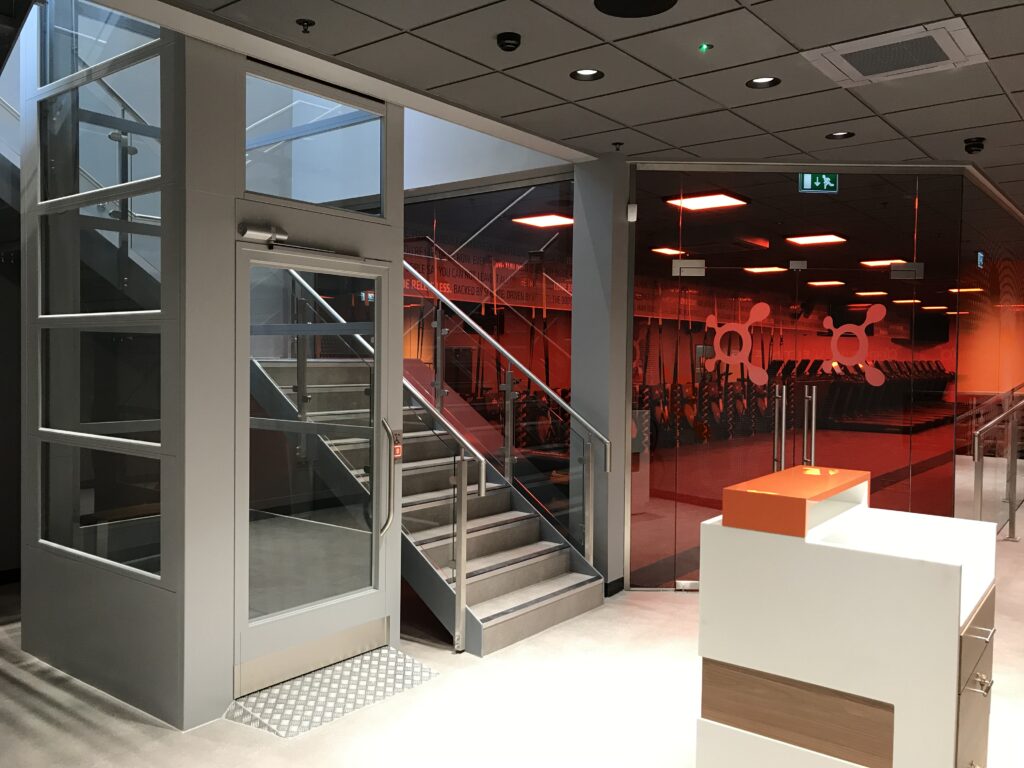
The Role of Platform Lifts
Platform lifts are designed to provide safe and straightforward access for anyone who finds stairs a barrier, including wheelchair users, people with limited mobility, parents with pushchairs, and those carrying heavy items. They play a key role in delivering inclusive access while also helping building owners meet their legal obligations under the Equality Act.
Building Regulations
While the Equality Act creates the legal duty to provide accessible routes, it is the Building Regulations that outline how public buildings must achieve this in practice.
Part M (England & Wales)
Approved Document M (Part M) sets out clear expectations for vertical circulation. It states that in multi-storey public buildings, a passenger lift is the preferred solution because it offers the most inclusive form of access. Where a passenger lift cannot reasonably be accommodated – often due to structural, space or heritage constraints – platform lifts or wheelchair platform stairlifts may be considered instead.
Enclosed platform lifts, open platform lifts, and inclined stair risers are commonly specified in these situations, offering compliant access where a conventional passenger lift isn’t feasible.
Section 4 (Scotland)
The Technical Handbook (Section 4) sets out similar requirements but may call for larger minimum platform sizes, particularly for low- and medium-rise platform lifts. Despite these regional differences, both regulatory frameworks emphasise providing safe, independent access for disabled users.
In both England and Scotland, the objective is the same: provide safe, independent access while selecting a lift that’s appropriate for the building.
Are Public Buildings Legally Required to Have a Lift?
Strictly speaking, UK law does not state that every public building must install a lift. However, if a building spans more than one storey, it must still provide a compliant vertical access route that allows all users, including disabled people, to move between levels safely and independently. In practice, this often results in a lift being required.
Where a full passenger lift cannot be accommodated, platform lifts or wheelchair platform stairlifts can satisfy legal duties when correctly specified, and step lifts may be appropriate for small level changes. Existing buildings have slightly more flexibility, yet they must still ensure equal access to services for disabled users and remove barriers for others who may struggle with stairs.
Depending on the building, this could mean a passenger lift, platform lift, platform stairlift, or step lift.
We support this responsibility with a broad range of models designed for many public environments, including universities, nursing homes, retail, heritage sites, and community buildings.
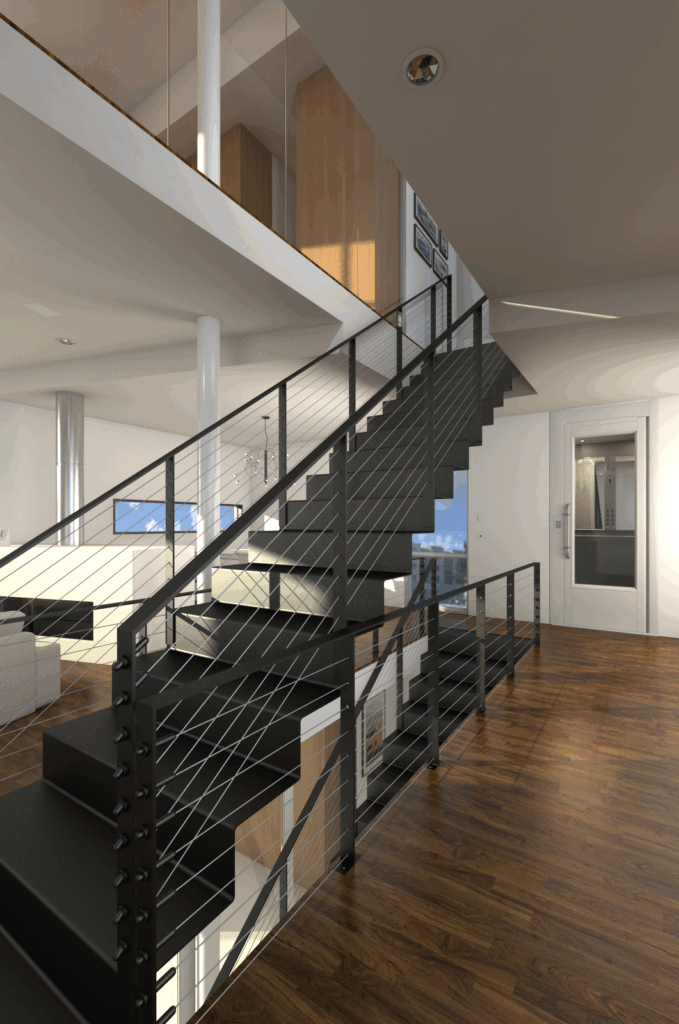
What Counts as a ‘Reasonable Adjustment’?
Under the Equality Act, what qualifies as a reasonable adjustment depends on several factors: cost, practicality, structural constraints, and how significantly the current layout disadvantages users. When stairs prevent access, a lift is often the most proportionate and effective adjustment, as it restores independent movement between levels.

Heritage or Complex Buildings
In heritage properties or buildings with structural constraints, the law recognises that a traditional passenger lift may not be feasible. This flexibility allows building owners to introduce alternatives that preserve the fabric and character of the space.
Platform lifts are frequently specified in these environments, as they require minimal construction and can be specified to fit in with existing architecture. Selecting the right lift is crucial to meet conservation needs while delivering compliant access. Invalifts has extensive experience in such settings, installing solutions in listed churches, heritage attractions and historic sites, including Sheffield Cathedral and HMS Alliance.
Before You Specify a Lift
- Choosing the right lift begins with confirming that the model meets Part M requirements, including suitable platform size, controls, and landing arrangements.
- Working with accredited installers is equally important; the Invalifts team operates under ISO 9001 and ISO 14001, demonstrating robust quality and environmental management standards.
- Safety should also be a priority. Many modern platform lifts include battery backup, allowing the lift to return safely during a power cut.
- Installation time varies depending on the building and the lift specified, although many platform lifts can be installed with minimal disruption once the site is prepared.
We Can Help
Every building presents different accessibility challenges. If you’re unsure which type of lift best suits your project, we’re happy to help.
Arrange a no-obligation survey, explore our lift range, or get in touch to discuss your requirements today.
Frequently Asked Questions
What’s the difference between Part M compliance and Equality Act compliance?
Part M sets the technical standards for accessibility in buildings, while the Equality Act sets the legal duty to avoid discrimination. A lift that meets Part M can help demonstrate compliance with the Equality Act, but the obligations of the Act are broader.
Can a platform lift be used instead of a passenger lift in a public building?
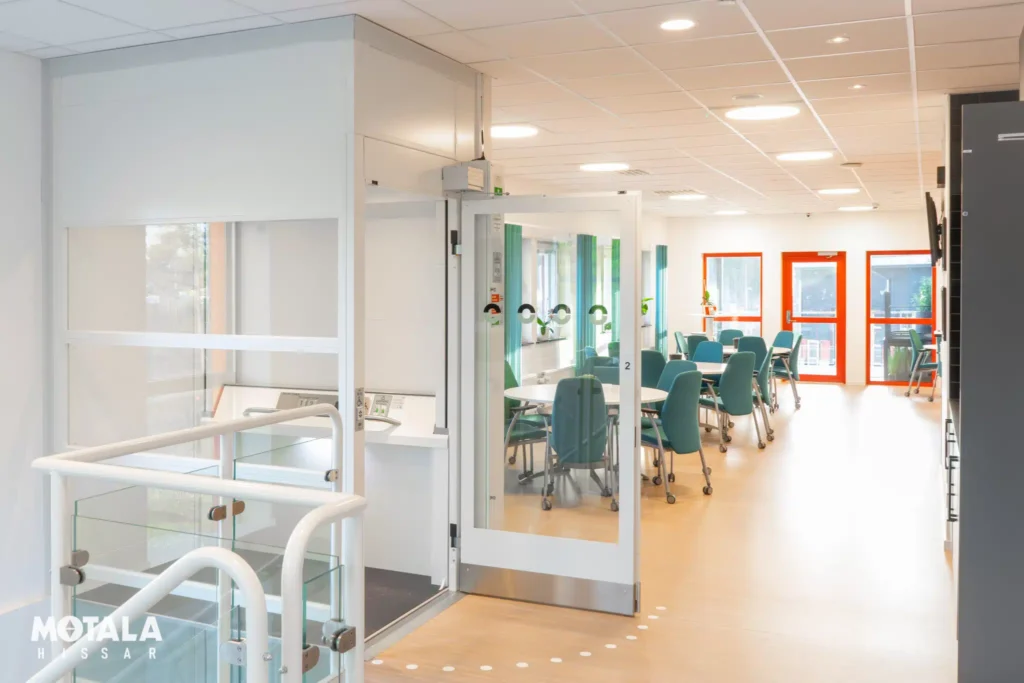
Yes. Where a passenger lift cannot be accommodated due to space, heritage restrictions or structural limitations, a platform lift (such as the Aritco PublicLift Access or Motala 2000) is widely accepted as a compliant alternative.
Do existing buildings have to retrofit a lift to comply with the law?
Not always. Existing buildings have more flexibility, but they must still provide a reasonable and safe means of access for disabled users and others who would otherwise be prevented from using the building independently. If stairs prevent access, a lift of some form may still be required unless another reasonable adjustment can achieve the same outcome.
Are lifts required in small public buildings with only one or two steps?
No. Small changes in level can often be addressed with a compact solution such as the UnaPorte® Platform Step Lift, provided it offers safe, independent use.
Can heritage buildings avoid installing a lift?
They may avoid a full passenger lift if installation would cause unacceptable harm to the structure, but they must still provide accessible routes. Discreet solutions such as platform lifts or stairlifts are commonly used in listed and conservation-sensitive buildings.
Who is responsible for ensuring that a lift meets legal requirements?
The building owner or operator is responsible for ensuring that any lift installed meets building regulations, accessibility requirements, and ongoing safety obligations.
How do I know which type of lift is compliant for my building?
Compliance depends on travel height, space available, user needs, and building type. The most suitable solution depends on the building, available space, travel height, and expected use. A site survey can help identify the most appropriate option.
Are platform lifts safe during power cuts?
Yes. All lifts supplied by us feature battery backup that safely lowers the lift to the ground floor during a power interruption.
How long does it take to install an accessible lift?
Many lifts can be installed in as little as one day, with more complex installations taking slightly longer. Planning and manufacturing times should also be factored in.