 Delivered Nationwide
Space constraints can make a vertical platform lift impractical, particularly in existing buildings. In these cases, an inclined platform lift offers a straightforward alternative, travelling along the staircase to provide safe, step-free access. Commonly used in commercial environments such as schools, retail spaces, and public buildings, they enable compliance without major structural work.
This guide explains what they are, how they work, and when they’re the right solution.
What They Are
A stair, or inclined, platform lift is a type of lift that travels along a staircase rather than vertically. Instead of requiring a shaft, it operates on a rail system fixed to the stairs or adjacent structure, allowing the platform to follow the gradient of the staircase. Designed primarily for a wheelchair user, it can carry a standing passenger where required.
These lifts are typically installed in buildings where space is limited or where structural alterations for a vertical lift aren’t feasible. Depending on the layout, they can be configured for both straight staircases and more complex designs with bends, intermediate landings, or changes in direction.
How They Work
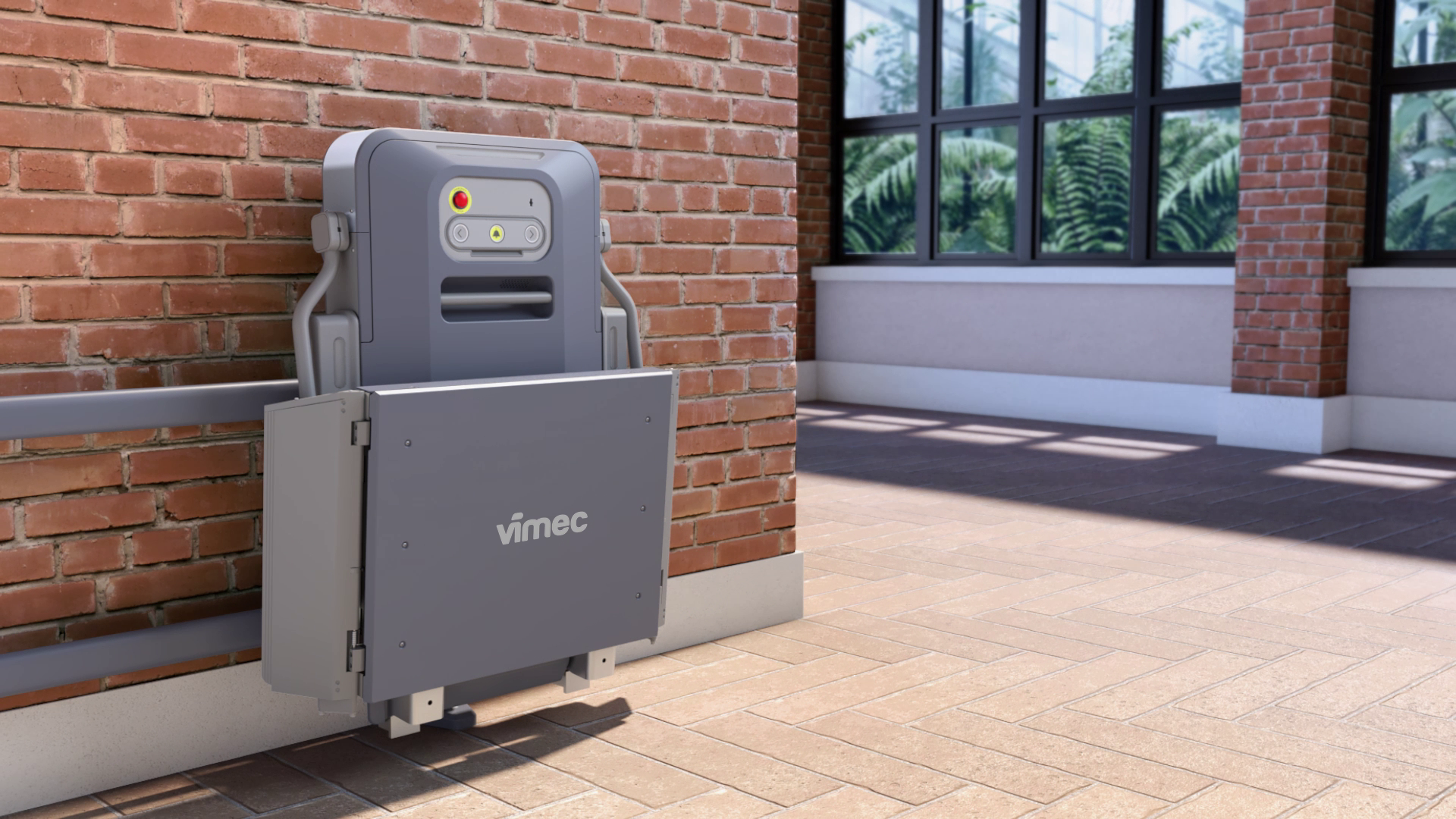
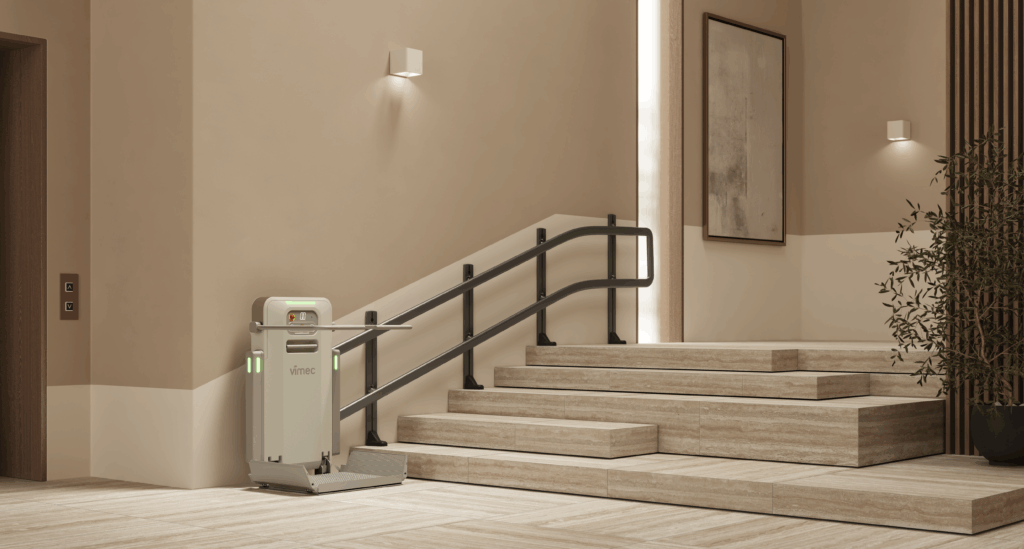
An inclined platform lift operates on a rail system that is fixed directly to the staircase or mounted to a supporting wall. The platform travels along this rail, following the gradient of the stairs to move between levels. When not in use, the platform folds away neatly to keep the staircase clear for other users.
Operation is simple. The user remains on the platform and controls the lift using constant-pressure buttons, or via an attendant control where required. Depending on the system, lifts may be battery-powered or mains-driven. Battery-backed models can continue to operate during a power cut, providing additional resilience where required.
Modern inclined lifts use traction drive technology, which ensures smooth, controlled movement with minimal noise or vibration. Combined with a compact, folding design, this makes them a practical and unobtrusive solution for busy commercial environments.
Where They Are Used
Stair platform lifts are widely used across commercial settings where step-free access is required but space is limited.
- You’ll often find them in schools and retail units, helping meet accessibility requirements without major alterations.
- They are also well suited to churches and listed buildings, where preserving the existing structure is important.
- In offices and healthcare environments, they provide a practical way to improve access between levels while keeping disruption and building work to a minimum.

Types of Stair / Inclined Platform Lifts
Inclined platform lifts are designed to suit different staircase layouts, with two main types available depending on the building.
Straight Staircases
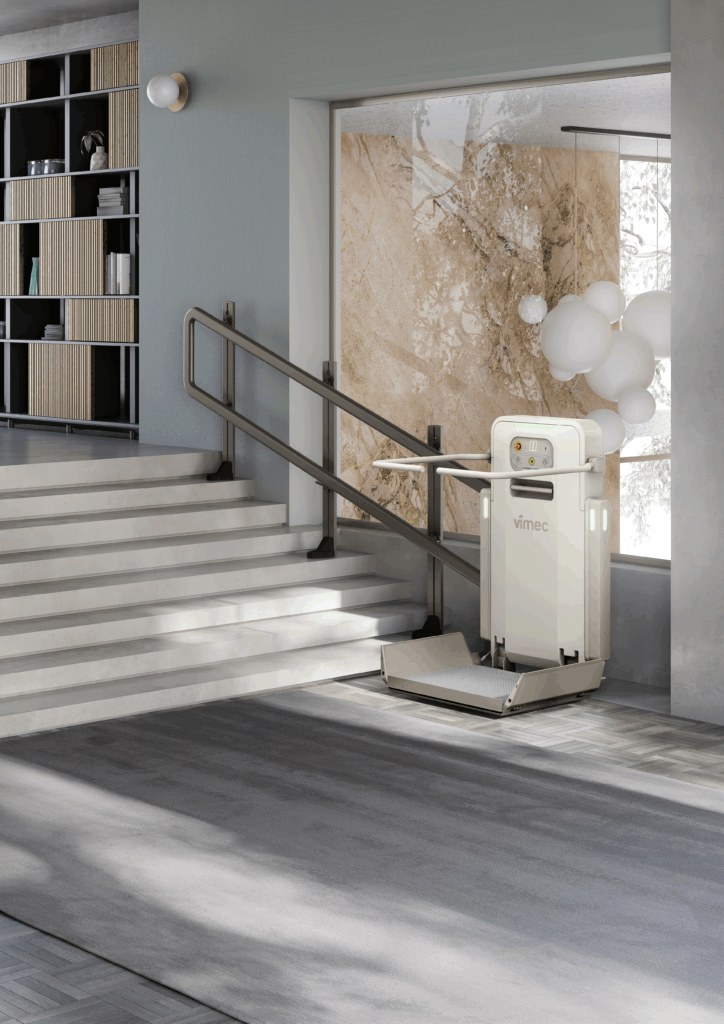
For straight runs of stairs, the lift uses a linear rail system. This makes installation more straightforward, with shorter lead times and lower overall cost. Models such as the Vimec V6 are well suited to these applications, offering a compact and reliable solution where the route is uninterrupted.
Curved Staircases
Where a staircase includes turns, intermediate landings, or changes in gradient, a curved system is required. These lifts use a bespoke rail that is designed to follow the exact shape of the staircase, ensuring smooth travel throughout. The Vimec V6s is specifically engineered for these scenarios, capable of handling complex layouts while maintaining consistent performance.
The Main Features and Benefits
- Space-saving design – Installed directly onto the staircase, allowing the lift to provide access without compromising the usability of the stairs for other users.
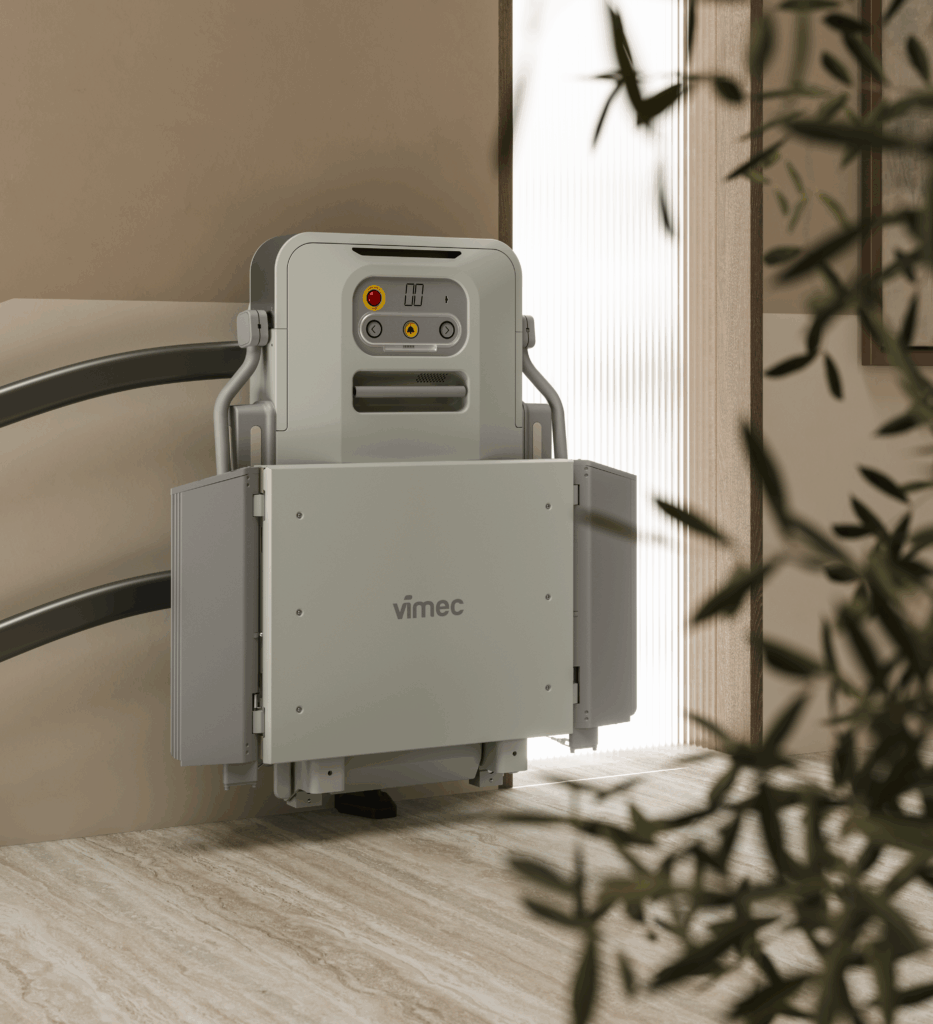
- Folding platform – The platform folds neatly away when not in use, keeping walkways clear and reducing visual and physical obstruction.
- Integrated safety systems – Features such as anti-crush sensors and safety arms help protect users and prevent damage to the surrounding environment during operation.
- Battery-powered operation – Continues to function during a power cut, ensuring consistent access in public or high-traffic buildings.
- Internal and external use – Suitable for a range of environments, from internal staircases to external entrances, offering flexibility across different types of sites.
What to Consider Before Installing
A site survey, along with photos of the staircase or site drawings, is usually the first step in determining whether an inclined lift is a suitable and feasible solution. From there, the following should be considered:
- The staircase must have sufficient width, typically starting from around 990mm to 1010mm depending on the model and configuration.
- The lift also requires a suitable fixing point, either a supporting wall or stanchions where wall mounting isn’t possible.
- A standard power supply is needed, although most systems operate on battery power during use.
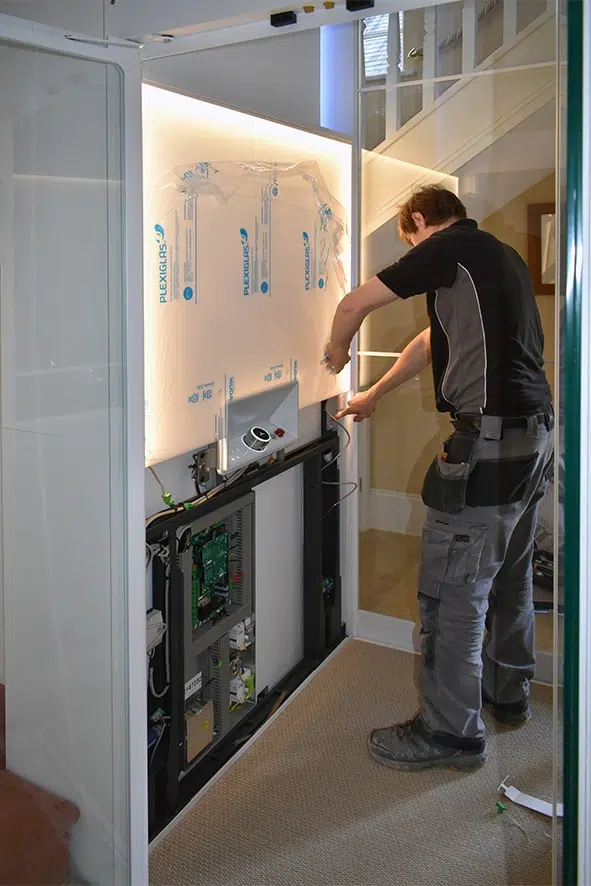
Installation must always be carried out by qualified professionals to ensure safety, compliance, and long-term reliability.
Advantages vs Vertical Platform Lifts
Inclined platform lifts and vertical platform lifts serve similar purposes but suit different environments. Inclined lifts are installed directly onto a staircase, meaning no shaft is required. This makes them ideal for retrofit projects where space is limited or structural changes need to be kept to a minimum.
Vertical platform lifts, on the other hand, travel straight up and down and are better suited to higher levels of travel. They also offer greater capacity options and are often preferred where space allows for a more traditional lift setup. Choosing between the two depends largely on the building layout and available space.
Browse our full platform lift range to find the right fit →
Choosing the Model
Choosing between a straight or curved inclined platform lift depends on the layout of your staircase. With experience across a wide range of commercial environments, our team can help assess your building and recommend a model.
Frequently Asked Questions
Can an inclined platform lift be installed outdoors?
Yes. Many models are designed for both internal and external use, with weather-resistant features to ensure reliable operation in outdoor environments.
Will the lift block the stairs?
No. The platform folds away when not in use, allowing the staircase to remain accessible for other users.
What happens in a power cut?
Inclined platform lifts are battery-powered during operation. In the event of a power failure, the lift can still complete its journey or return safely to a landing.
Can it be fitted to a curved staircase?
Yes. Curved models are designed with bespoke rail systems that follow turns, landings, and changes in gradient.
How long does installation take?
Installation can often be completed within one to a few days, depending on the complexity of the staircase and the specification of the lift.
What weight can an inclined platform lift carry?
Most models offer a load capacity between 225kg and 300kg, making them suitable for wheelchairs and, where required, an accompanying person.